Load Transfer Along Continuous Collagen Fibers Reduces the Importance of Wall Thickness Variations
Abstract
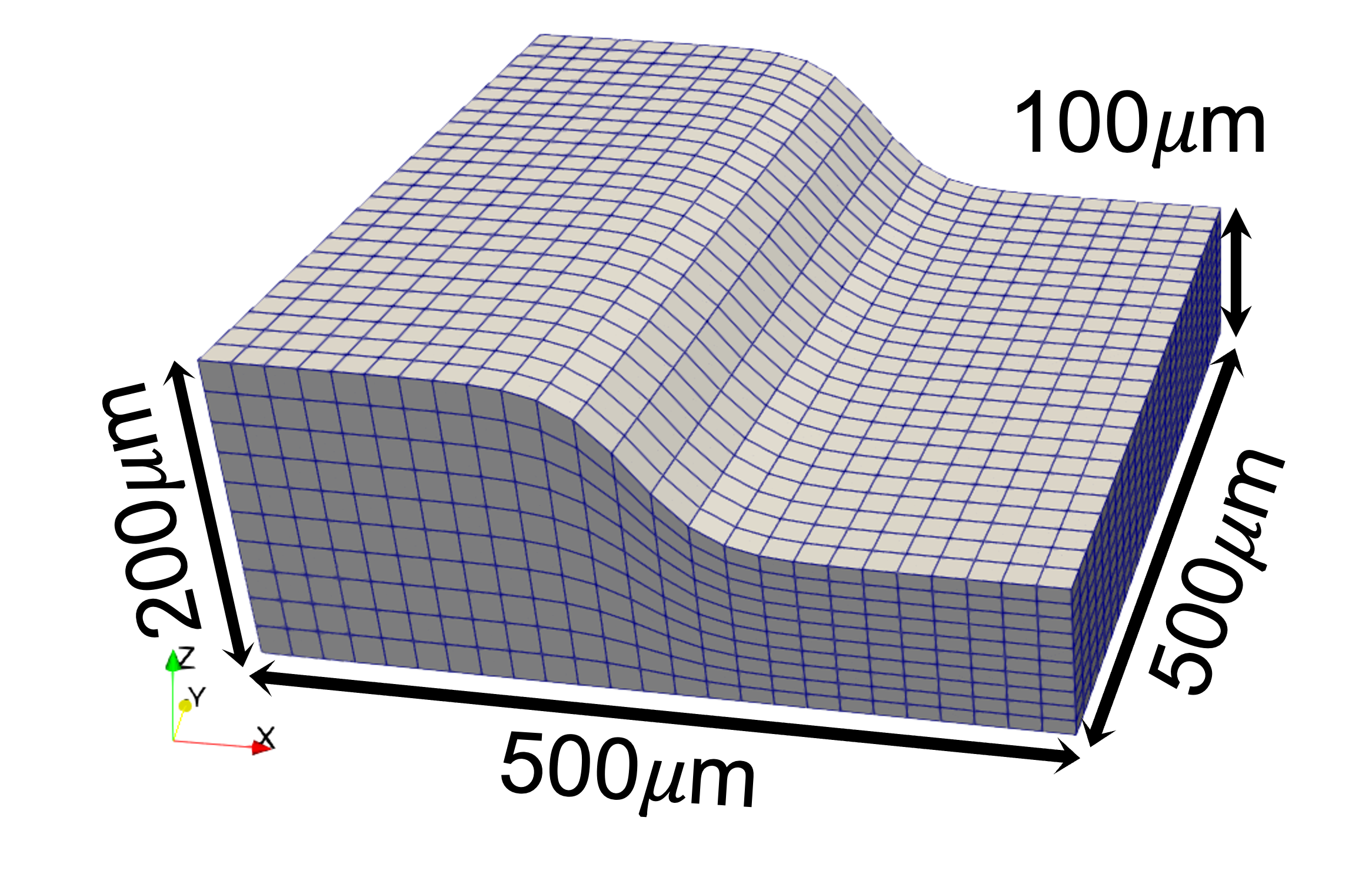
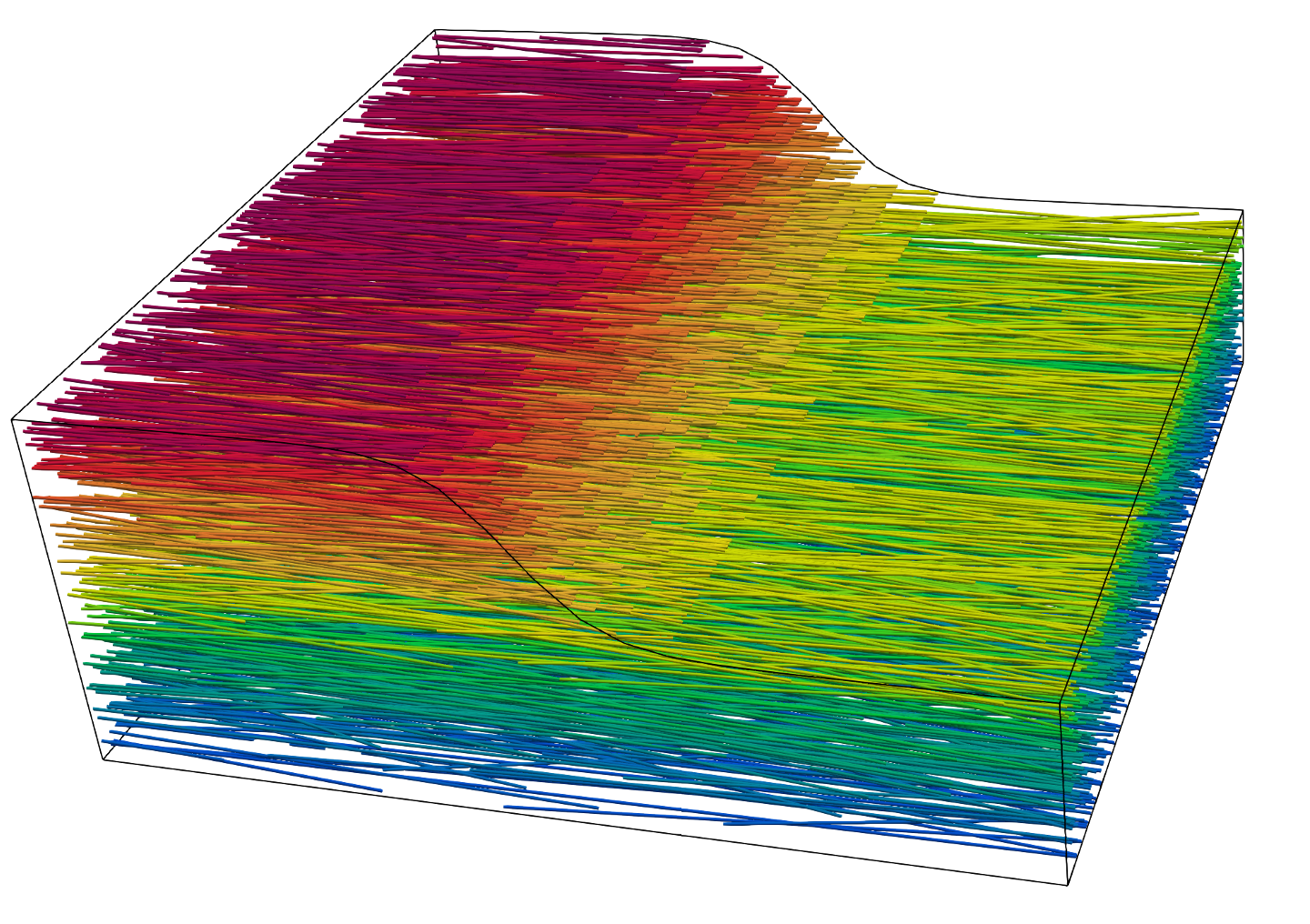
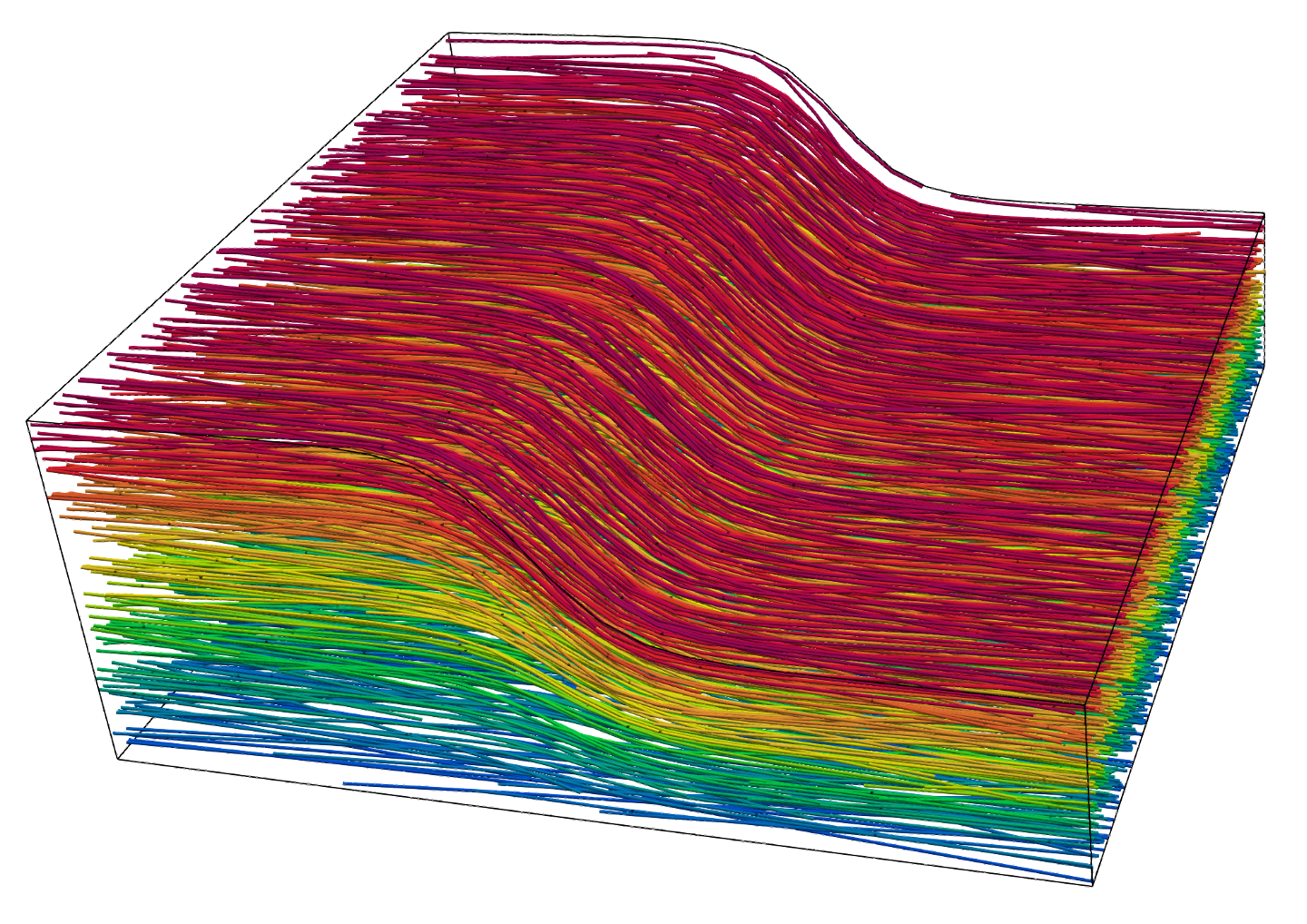
The mechanical response of biological soft tissues is influenced by wall heterogeneity, including spatial variations in wall thickness. Traditional models for homogeneous soft tissues under uniaxial loading predict higher stretch and stress in thinner regions. In prior studies, the role of collagen fibers in regions of thickness transition has been largely neglected or only considered in terms of their effect on anisotropy. Here, we explore the role of collagen fibers as primary load-bearing components across regions of varying wall thickness, using a three-dimensional mesoscale model incorporating explicit collagen fiber architecture and a gradual thickness gradient. We examined two distinct collagen fiber configurations across the thickness transition: one featuring abrupt fiber termination and another with fiber continuity. Finite element analysis under uniaxial tension revealed that load transfer by the continuous fibers markedly reduced the importance of the change in wall thickness, with stretch differentials dropping from 20.97%(fiber-termination network) to 0.68% (continuous fibers) and stress differentials dropping from ~65% (fiber-termination network) to 2.3% (continuous fibers). Fiber tortuosity delayed the point at which mechanical response was governed by fiber structure. These findings demonstrate the critical role of fiber continuity in reducing stretch and stress gradients across regions of varying wall thickness and clarify the importance of accurately representing fiber architecture when modeling soft tissues with heterogeneous wall. thickness.
Methodology
We used a computational biomechanics framework to evaluate the relative influence of collagen fiber continuity and wall thickness variation on tissue-level mechanical response in cerebral aneurysm models. The analysis focused on how load is redistributed when collagen fibers form continuous pathways across the tissue microstructure.
The study integrates the following components:
- Fiber-informed constitutive modeling of aneurysmal tissue
- Parametric variation of wall thickness and collagen architecture
- Quantitative comparison of stress-transfer behavior across scenarios
- Evaluation of mechanically relevant microstructural descriptors

Key Findings
- Continuous collagen fiber pathways play a dominant role in load transfer within aneurysmal tissue.
- Microstructural continuity of fibers can reduce the relative importance of local wall thickness variations.
- Stress redistribution patterns are strongly governed by fiber architecture and connectivity.
- The results support incorporating collagen structural descriptors into rupture-risk analysis.
Conclusions
This study highlights the critical role of continuity of fibers in modulating the mechanical behavior of collagenous soft tissues with wall thickness variations. Finite element simulations revealed that stretch and stress disparities between thick and thin regions can be ameliorated in specimens with continuous fibers spanning regions of thickness gradients, through effective load transfer and localized increases in fiber volume fraction. Fiber tortuosity modulates this behavior by delaying the influence of collagen fibers to higher stretches. As a result, before fiber recruitment, the load is borne by the underlying matrix and hence dominated by the effect of local wall thickness. These findings demonstrate that geometry alone cannot explain local mechanics. Rather, microstructural fiber organization plays a dominant role once fibers are recruited. Therefore, accurate representation of collagen structure is vital for reliable biomechanical modeling and rupture risk prediction, underscoring the need for imaging tools that capture microstructural features such as fiber continuity and local fiber volume fraction. We conjecture that for tissues with continuous fibers, constant-thickness models may yield accurate predictions, even when local thickness data are unavailable.
Research Impact
Field
Biomechanics, Vascular Mechanics
Application
Aneurysm rupture risk assessment
Access
DOI and PDF links above